[Case 03]
Identity verification for constrained devices
Identity verification
Boosting verification completion in constrained markets
[Project Overview]
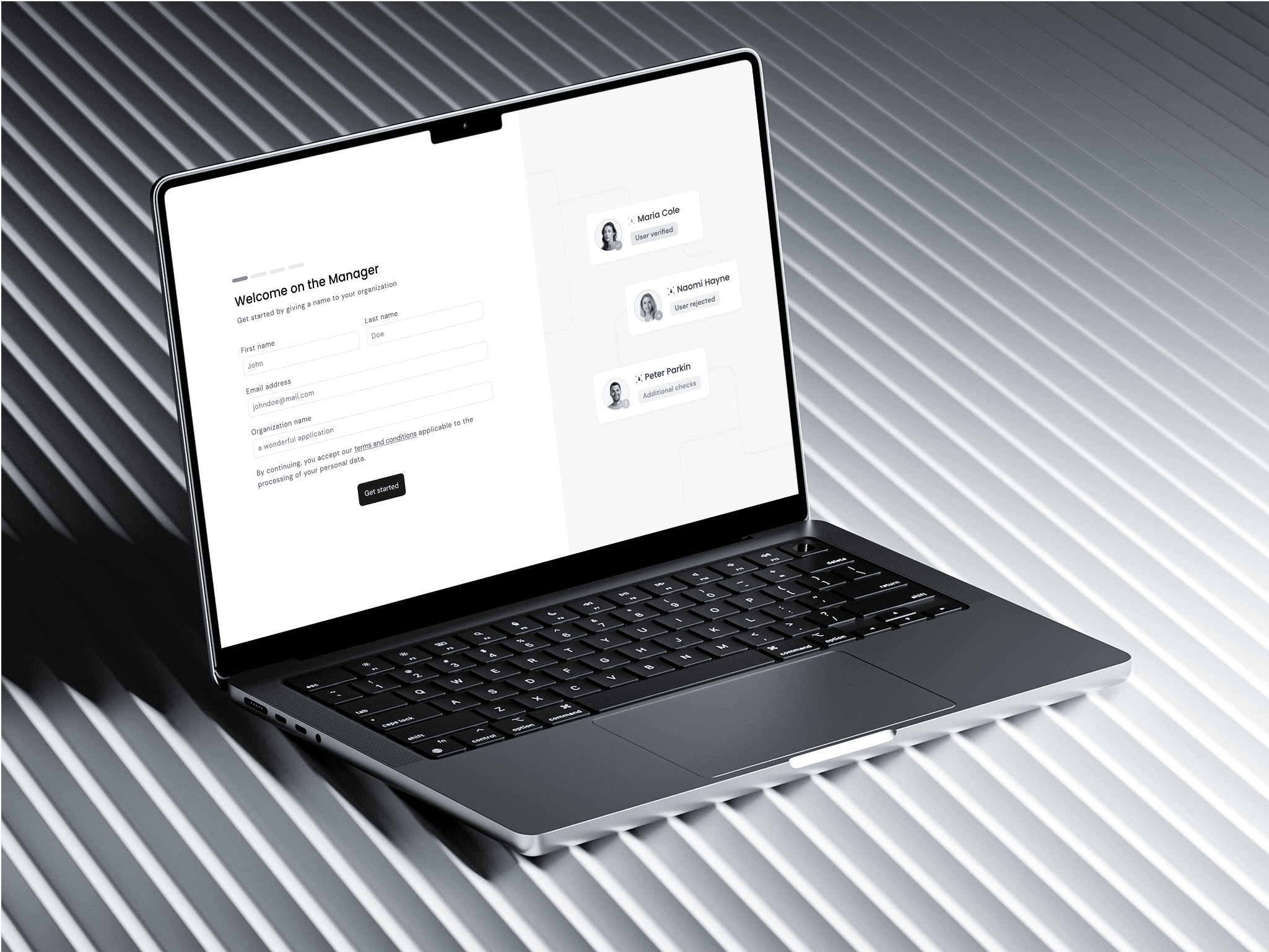
Verify is Synaps' B2B SaaS for identity verification, deployed in white-label across twenty client platforms in fundraising and token sales. This case study focuses on the redesign of the Face Recognition step, the highest drop-off point in the flow and the sharpest design problem in my time on the product.
[Problem Statement]
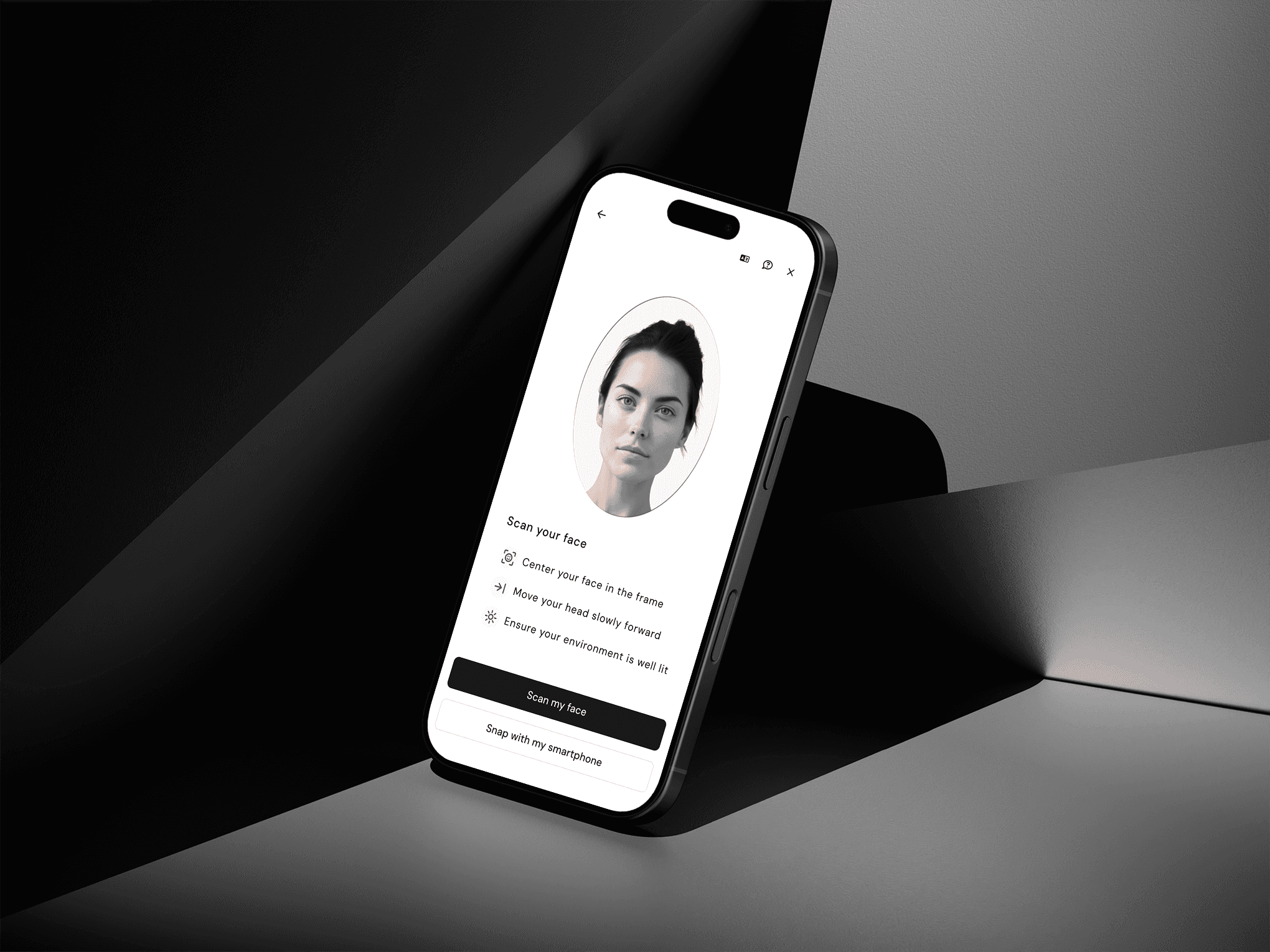
In geographies with constrained devices, Pakistan, parts of Africa, where our clients were growing a meaningful share of users couldn't pass step one of verification. The third-party FR provider required minimum camera quality and lighting we couldn't negotiate. With a critical client launch incoming in six weeks, shipping a fix was non-optional.
[Industry]
Identity verification
[My Role]
Product Designer
[Platforms]
Desktop and Mobile
[Timeline]
2023 · 6-week sprint
[How we found it]
Triangulating evidence under compliance
Three angles into a problem we couldn't replay
"The screens we needed to understand were the ones we couldn't see. Compliance blurred everything in session replay so we triangulated."
Backend dashboards
User interviews
Internal device QA
Root cause identified
[The deeper problem]
Third-party provider, a black box we couldn't negotiate with.
Minimum camera quality and lighting required to pass the threshold.
Drop-off concentrated in markets with constrained devices.
[Constraints]
Can't change the FR provider — timeline-incompatible.
Must auto-deploy across 20 white-label clients with zero integration effort.
Poor mobile optimization that slows her down.
[Process]
Replace the FR provider, rejected
Migration scale incompatible with the 6-week deadline.
Any new provider would have its own thresholds, root problem unsolved.
Vendor lock-in risk too high to decide under deadline.
Add inline help insufficient
Lighting tips, retry prompts, device guidance kept as adjacent content.
Assumes the problem is user education. It isn't.
Better instructions don't change what a sensor can produce.
Build a path off the current device, the direction we took
If the primary device fails, give a path to one that works.
Multi-device fallback baked into the flow, bidirectional.
Auto-deploys across 20 client flows, zero integration effort.
Shipped QR + URL with bidirectional handoff
On the FR screen, two paths surface from the start.
URL fallback for users whose camera quality made QR scans unreliable.
Session handoff is bidirectional, desktop ↔ mobile, state preserved.
[Outcome]
Shipped on time, within the engineering window before the critical client launch.
Twenty white-label deployments benefited on release day, zero integration work needed from any client.
Meaningful drop-off reduction in constrained geographies. Precise figures retained by Synaps.
[Key Learnings]
Design for the constrained twenty percent
Edge cases at scale aren't edge cases anymore. The geographies we designed for weren't peripheral they were where our clients were growing.
Discovery under compliance is a skill
When you can't watch sessions, you triangulate. Backend metrics + interviews + internal QA gave better signal than any one method alone.
Hardcoded beats configurable when value is universal
When no rational client would choose differently, the configuration surface is just friction. A question I now ask earlier in any cross-tenant feature.